November 13, 2024
When Taren Beller, the new owner of Lowville Town Hall Theatre, started looking for a tasting room in downtown Lowville, she never thought she’d end up with a historic theater—one that began as a USO club and was an opera house and a silent movie house in its past.
After having purchased Tug Hill Vineyards in 2021, now Tug Hill Estate, Taren and her husband Jonathan Beller, have been working hard to enhance the Estate so it will fill multiple needs in the community. While the estate offers culinary choices, fruit picking, and a venue for music that is busy all summer long, the winters are not as busy. Taren wanted to increase foot traffic in winter by offering a tasting room downtown. But it did not work out that way.
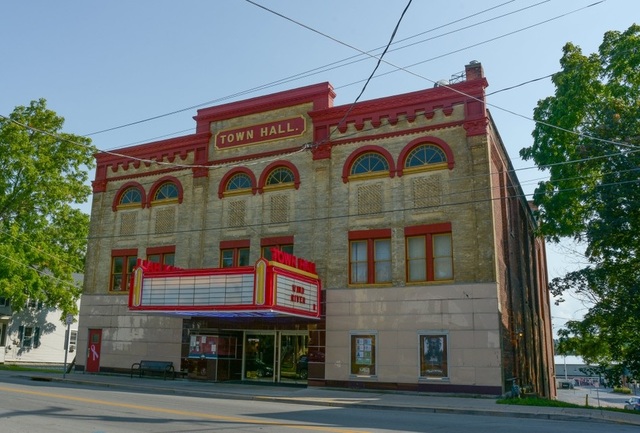
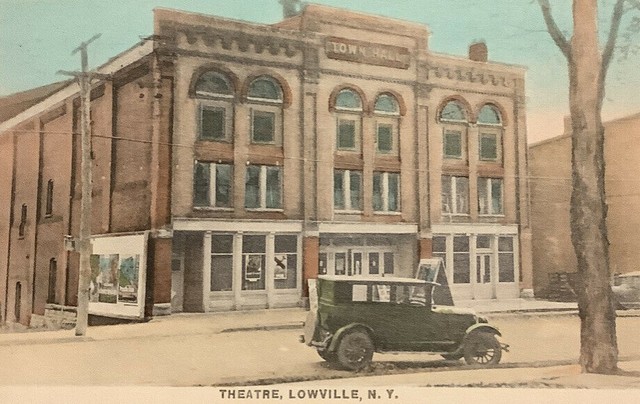
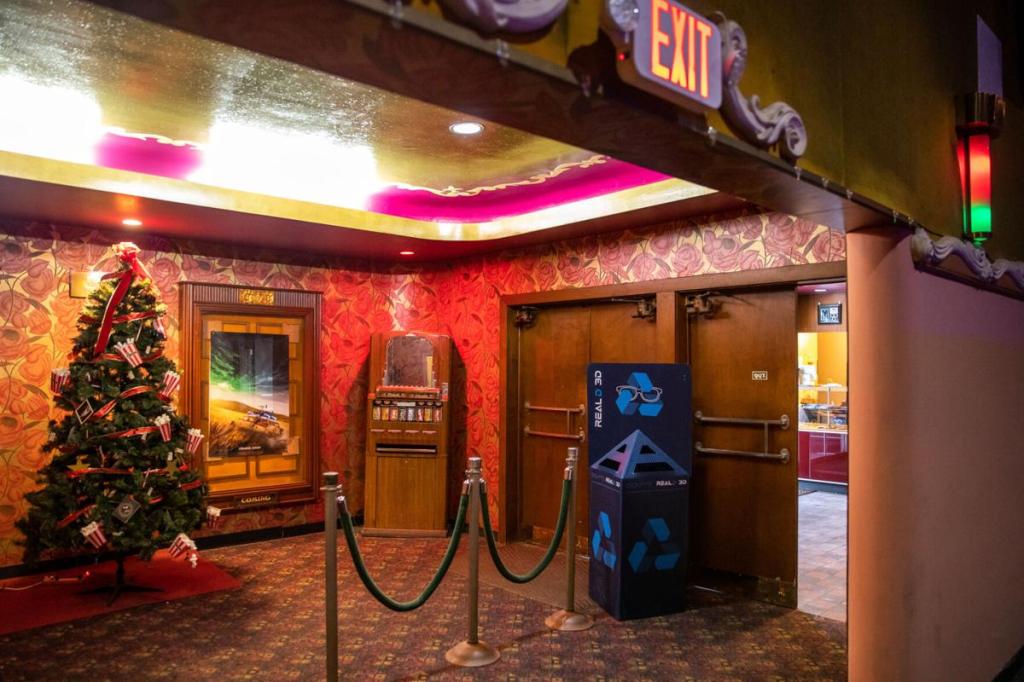
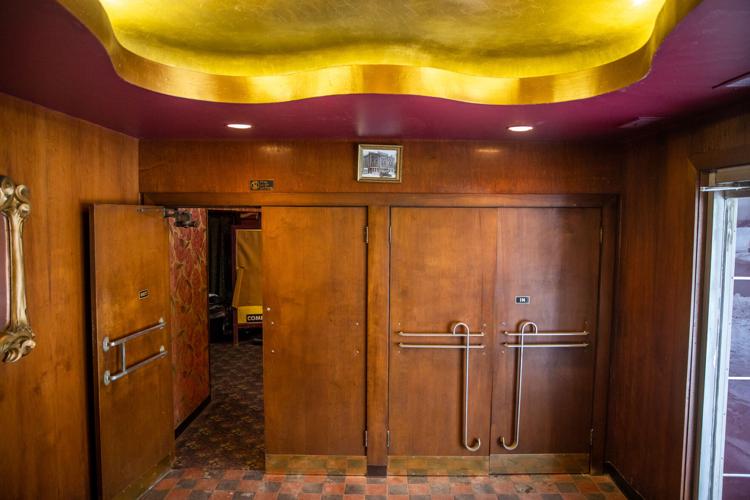
Once she saw the Town Hall Theater and realized the attention it needed, she decided to take it on. She knew it was a community treasure and wanted to give back to the community in some way by helping to bring the theater back to life. Aside from patchwork updates, its last renovation was in 1949. With the help of some grant funds, she hopes to restore the theater to its period circa 1900. Working with the Lewis County Historical Society, Taren hopes to rebuild aspects of the architecture. There are no known photographs of what the building looked like on the interior. The façade will be restored to its original 1900 appearance. Taren plans to move the concession area into a larger adjacent space, but she is limited in her attempts to provide a tasting room due to the footprint of the building itself. The 600 seats occupy most of the interior space with little room for anything else.
Other limiting factors to restoration are the murals, which were painted onto the walls. She hopes to preserve them in some fashion but if structural changes are required, this may prohibit their restoration.
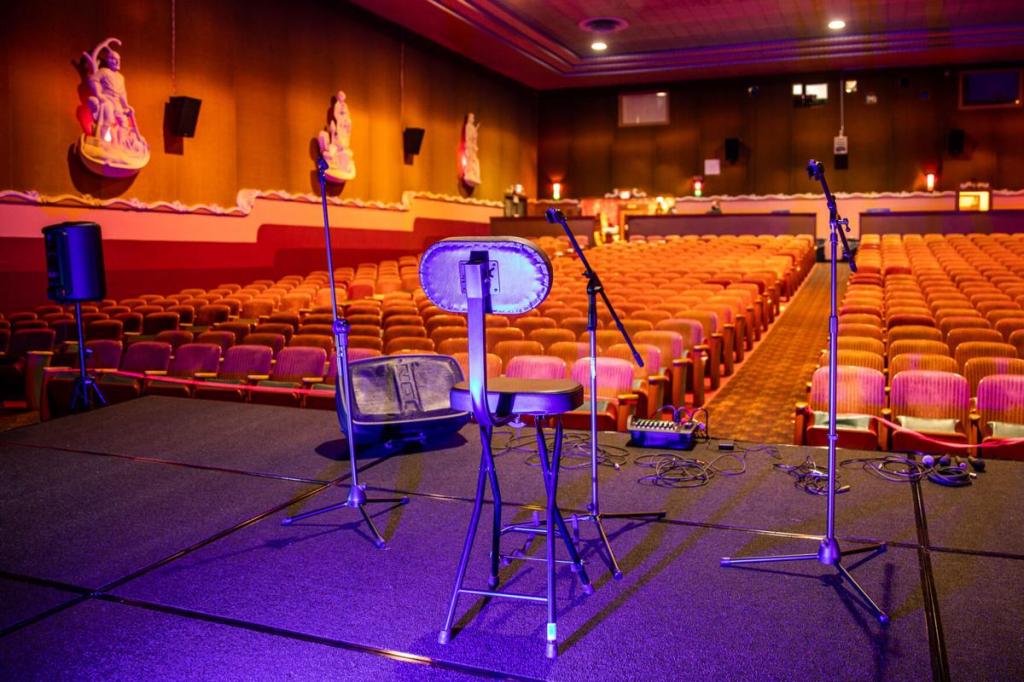
About half the original, reddish-brown colored seats have been replaced by more modern blue ones. Taren hopes to remove some to renovate the stage area. She wants to invite local theater in but cannot offer a green room, backstage, or even wings to speak of, and no real opportunity to change in the foreseeable future. The back wall is only a few feet from the actual projection screen. She only has the proscenium arch with a small apron and a temporary small thrust stage. Her solution is to remove seating to accommodate a larger hardwood thrust stage. The space would be open to one-act plays or other productions where the set is minimal. It would only require her to take out about 100 seats, leaving nearly 500, which is more than adequate for any show.
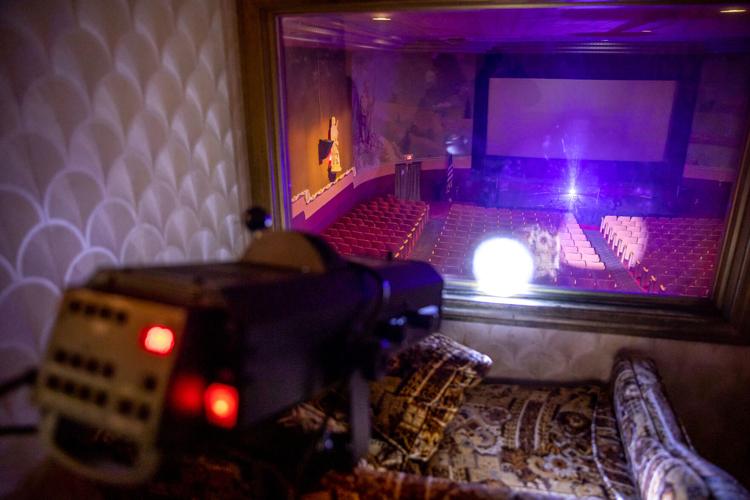
The screen can also be used in tandem with any production to allow for multi-media performances. Luckily, it was replaced within the last few years and is quite sophisticated: a complete 21st-century digital format projector that displays three trillion colors. But because of its construction, it cannot be rolled up out of the way. The screen does lend itself as a backdrop. The screen can then serve as a “setting” in productions, or used for multimedia presentations. The old celluloid projection system is still there but Taren is unsure whether it works. Of course, it requires more manpower because the reels need to be loaded. However, the possibility exists for older movies to be played should the occasion arise.
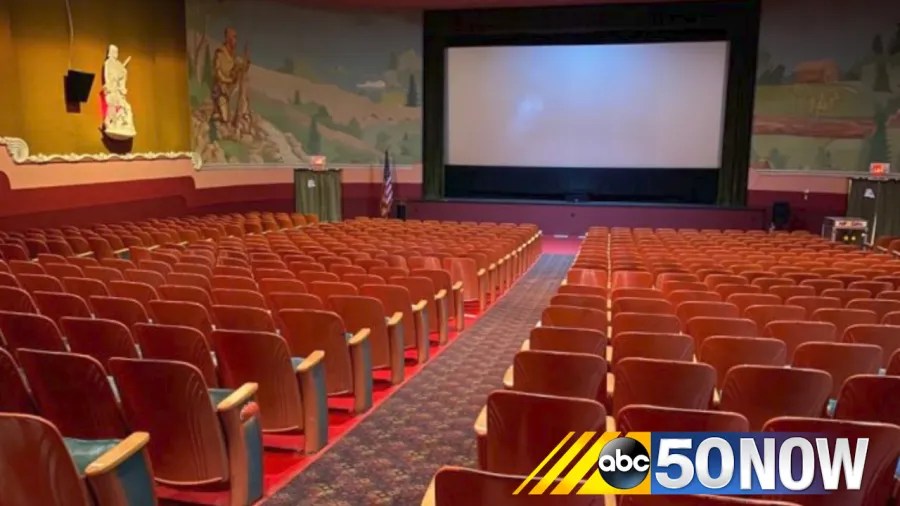
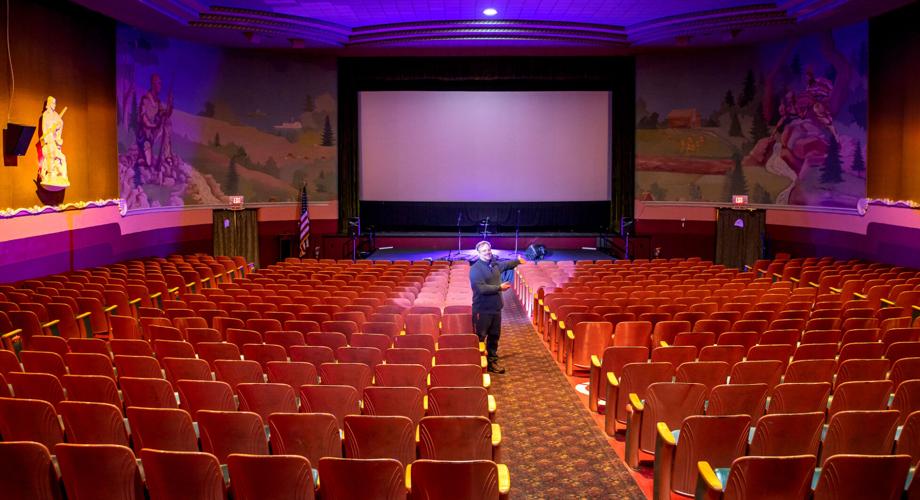
Taren is also interested in having concerts in the building. Even if she removes seats for the stage or to accommodate food sales, there is plenty of space for concert seating. She has yet to develop any pricing structure for rentals for organizations that want to present shows. She is waiting for the work that must be finished, first. In the meantime, she will continue to show movies, which in and of itself is hard for independent theaters.
When renting movies from distributors, she must agree to a certain amount of time for the movie to be shown. With only one screen, she is restricted to showing one movie for that period. This creates an inability to compete with larger theaters that offer multiple choices. Additionally, distribution companies make most of the money earned at the box office. Currently, movies are shown only on weekends; weekdays are open for other events.
Aside from the faded murals, Taren must also work with pea-green felt walls. Felt was commonly used in old theaters for sound absorption and to enhance acoustics. The carved figurines on the walls will end up at the Lewis County Historical Society. And an antique organ will find a new home.
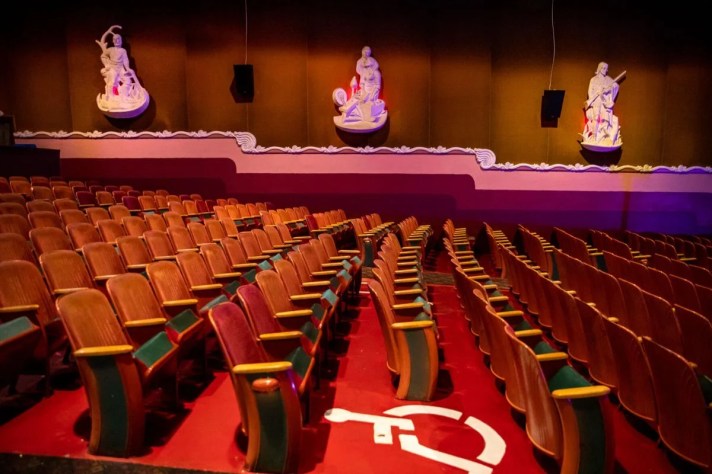
Updating the venue will take some time but will make the location more conducive to other organizations. Some event organizers have asked to rent the space for such events as talent shows and parties, but Taren hopes to reach a broader audience. She would be interested in seeing a music series, concerts, speaker’s series, and plays in addition to movies. Taren’s tasting room idea cannot come to fruition at this time. But given her problem-solving attitude, this won’t be an issue. I am sure she will have a solution soon.
Taren has already given back to the community by paying it forward. She hired two woman-owned, local companies when she wanted to rebrand Tug Hill Estates online identity and is pleased with the results. She plans on continuing to use Steeple and Hearth for social media and Nap Time Designs for the Town Hall Theater’s website and social media outreach.
Taren is waiting to hear back from the Downtown Revitalization Initiative on her grant funds for restoration. If she does qualify for the grant, it could be as late as 2026 before work can begin.
If you are interested in providing music for Tug Hill Vineyards, or if you want to find out more about her plans for Town Hill Theatre, email Taren Beller.
 Tug Hill Artist Network