



Art and Healing: Building Community Through Creativity by Kelley Martin
When I first moved to 40-acres in the Adirondack Park during the height of COVID, I was driving an hour and a half to teach in a mask at Utica College. Driving never bothered me but teaching in a mask was enough to make me want to retire early.
I thought it ironic that Utica is where I started teaching English full-time 20 years ago and it is where I stopped teaching last year. Before I taught, I was in nonprofit arts and humanities organizations: I was director of a small press, a professional dance company, as well as program director for an arts center, a traditional arts organization, and a humanities center in North Carolina and West Virginia. I have run festivals and presented artists in all of them.
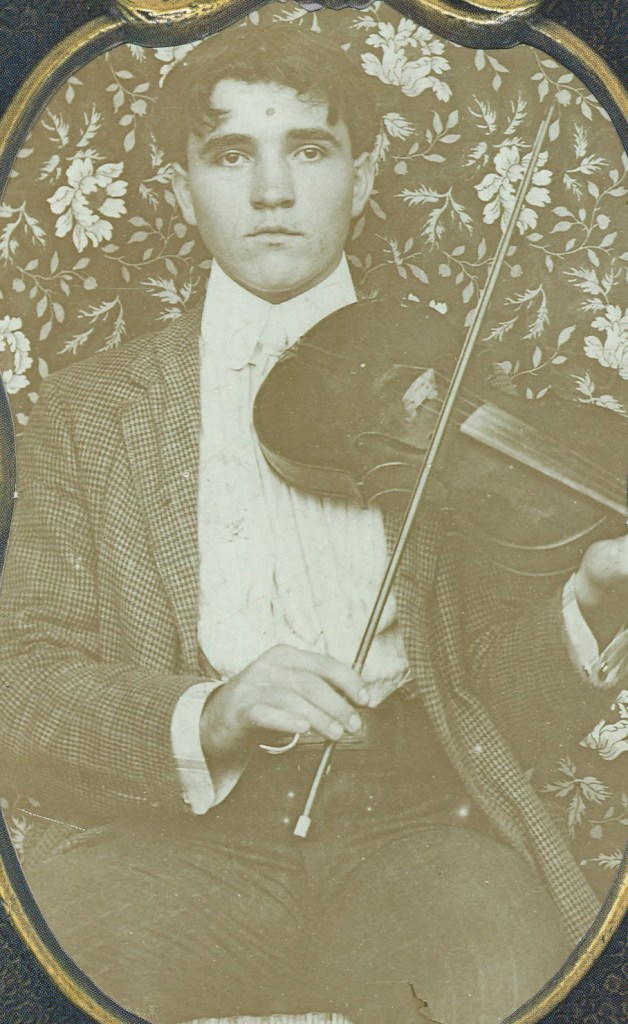
Art has always been part of who I am. My great grandfather was a fiddlemaker in West Virginia and one of the first students accepted to Julliard. My grandmother sang (loud and off key but she sang) and made beautiful quilts. My father played the guitar. My mother says I carried my “record player” with me everywhere I went ever since I was three-years-old. But other than having a good ear, I am not a musician. I tried piano and clawhammer banjo, failing miserably at both! I also tried modern dance, theater, and journalism in my search for the perfect art for me. I settled on writing. I dabble in other areas but focus on writing. I have published a book and other material, but none of this was accomplished without the help and support of my writing and art communities.
Coming from West Virginia, I am familiar with rural life, but I have also lived and worked in large cities. I prefer country life but gaining access to arts and folks who love the arts is not easy when there is at least an hour’s drive to get to events. I want to write but do not have a group of readers and writers for inspiration and motivation.
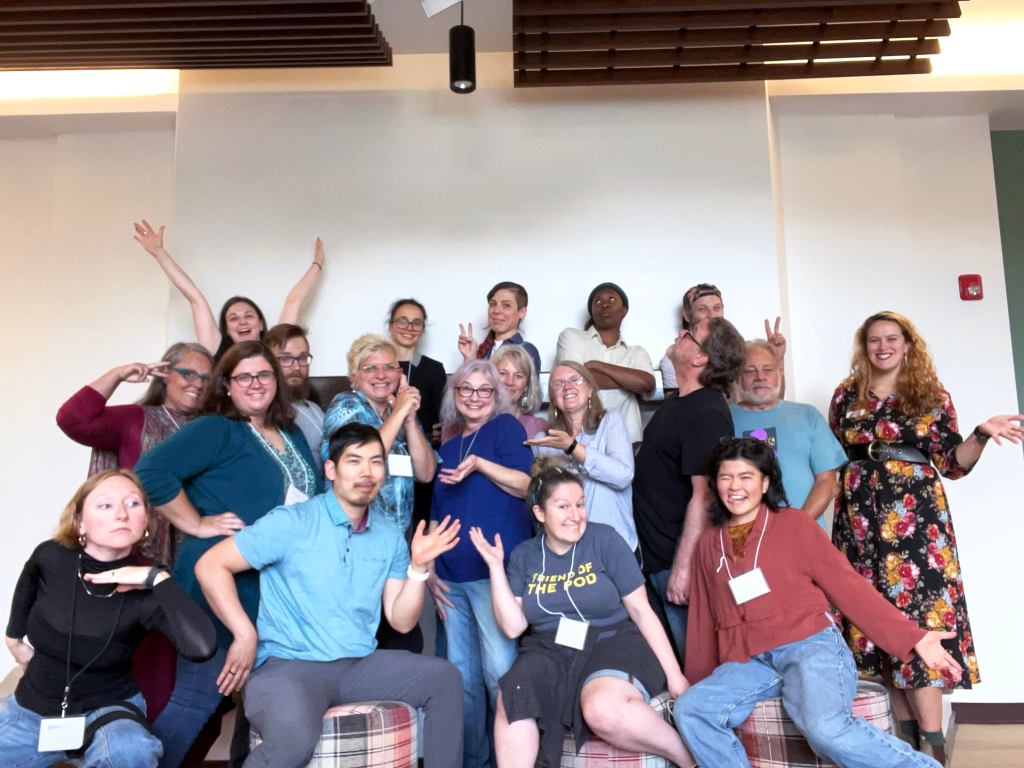
I’m in the middle looking confused.
When the St. Lawrence Arts Council announced the Artists as Entrepreneurs program, I applied, thinking it would help me share my ideas. It was this fellowship that gave me the opportunity to connect with and learn about artists in the region. Once I gained the “permission” from my peers to embark on this journey, I felt motivated again.
In my four years here, I have spoken to numerous local artists and crafters where I learned what some of the major hurdles are in displaying art, having events, and access to classes and workshops. My mission is to find out who and what in the area promotes the arts and who wants to be promoted. I am hoping that helping one another and starting a community where artists and their audiences can connect will enrich everyone. Some ideas like an artist map and listings, event listings, craft fair listings, performance venues, etc, would help our artists.
My search has just begun, and I will share what I find with this group. What I have learned is that many of us in the arts community experienced profound loneliness during COVID. Loneliness was already high when COVID came along and made loneliness an epidemic. Artists are greatly affected because they rely on their audience—if they have no audience for feedback, they are hindered unless they find another way of interacting with people. Many were creative during COVID and found unique ways of collaborating digitally! But some, like me, yearned to see a smiling face or to hear someone read a poem out loud or play a folk song on the guitar.
Art is healing. Art gives people the opportunity to interact in a way that is less verbal and less confrontational, something that is needed in today’s world. It allows us to see many perspectives on the human condition. It is a universal language that transcends cultural boundaries, facilitating communication and fostering understanding between diverse groups. Engaging with various artistic expressions not only deepens empathy but also broadens people’s worldviews, ultimately fueling creativity and innovation for artists. Simply put, it is a win-win for everyone.
Thinking creatively is not limited to one type of art. Creating is healing. Creating with others is unifying. Working together toward a common goal in art is affirming of who we are as artists and individuals. And, all art is needed now more than ever. Tug Hill Artists Network (THAN) does not discriminate when it comes to art–all art is appreciated, from recycled art to Art Nouveau, from folk to fine arts, from rap to classical music, from clogging to ballet, and from Shakespeare to improv.
To that end, I am asking poets, dancers, storytellers, musicians, all artists please share your work to the Facebook Page (it is your page too). The page is meant to share arts in the area. Share your events or other events. Share your work in progress or your finished pieces. Invite conversations. Also, if you want to be interviewed or know someone who does, email me and we can talk about it. Sharing our stories is imperative to community. Audience members share as well! What do you want to see? All you must do is follow the page first to share an item onto it.
My next request is for you to fill out this art survey so that we can, as a community, start to make some plans for classes, workshops, and events. Once we get an idea of who is interested and in what, we can decide on next steps. There is no cost or fee. This is done out of passion for art and community. We can seek funding later for any ideas. We plan on having an in-person meeting this summer sometime for those who can meet.
In the coming weeks, you will hear more about me and others who are interested in the same thing – working together rather THAN alone.
Meeting Misfits: Yokel’s Creatives, Cultivators, and Characters

Subscribe to continue reading
Subscribe to get access to the rest of this post and other subscriber-only content.
All Things Beautiful: Connie Stahl Noftsier
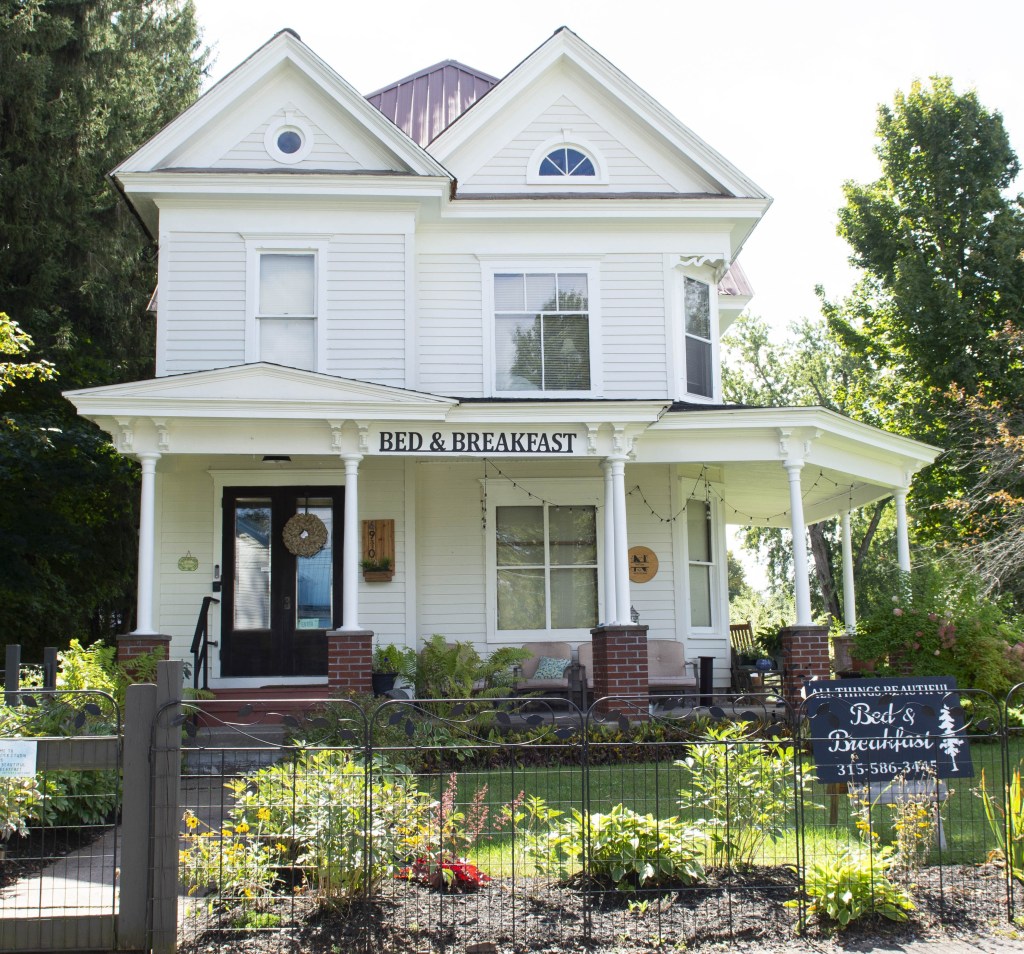
*All photographs taken by Connie Noftsier
Connie Stahl Noftsier is a visual artist based in the charming town of Croghan. She was one of 18 artists in the North Country chosen to attend the Artist as Entrepreneur (2024) program at St. Lawrence University. This program was presented by the St. Lawrence Arts Council and NYSCA.
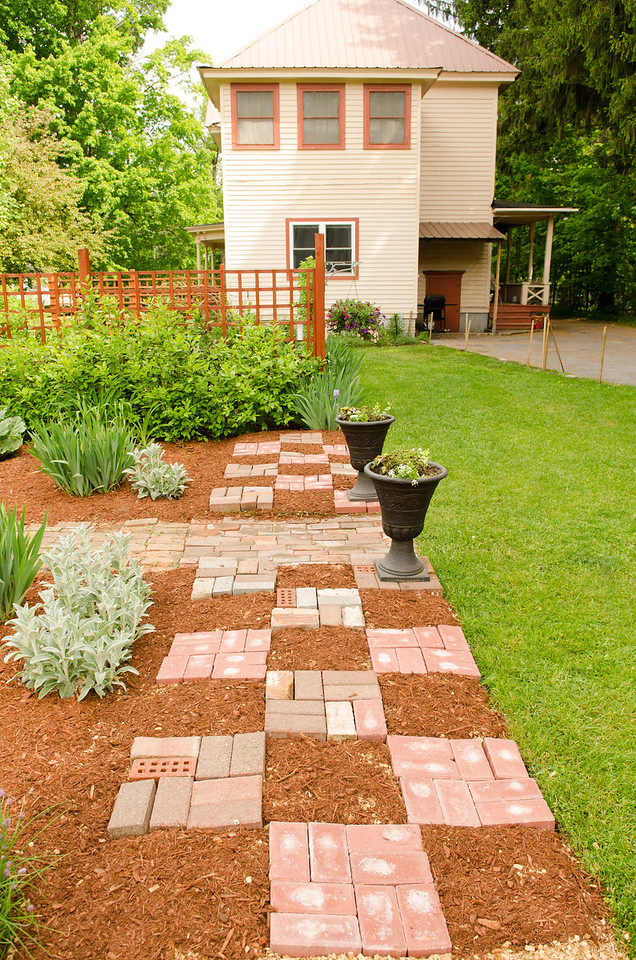
Connie’s studio is on George Street behind Monnat’s IGA. It is housed in a gorgeous Victorian Bed and Breakfast. The place lives up to its name: All Things Beautiful. Connie and her husband, Randy, have meticulously cared for it for the last 15 years. The restoration work is obvious, from gleaming hardwood floors, doors, and cabinets to a chef’s kitchen. Connie designed the kitchen and had it made by a local craftsman. Her attention to detail is clear.

Connie runs the five-bedroom B&B and creates art from her home studio. Her designs are unique and whimsical works in needlepoint, embroidery, photographs, and watercolors. She spent years as a photographer and still has equipment for taking photos of her art. She loves photographing the natural world and uses her photos in her designs. Also having been a landscape designer, Connie brings her love of the natural world into her artwork. Randy is a certified mushroom forager and Connie gathers much of her inspiration from the various mushrooms he collects.
All things beautiful fill the entryway. Fiber sculptures of native flowers, Monarch butterflies, lunar moths, and mushrooms line the wall in three-dimensional forms. The first thing anyone wants to do is touch the ornate and detailed creatures. Nevertheless, signs encourage guests not to do so! Moving into the shop, many items line the walls and shelves, waiting for visitors.

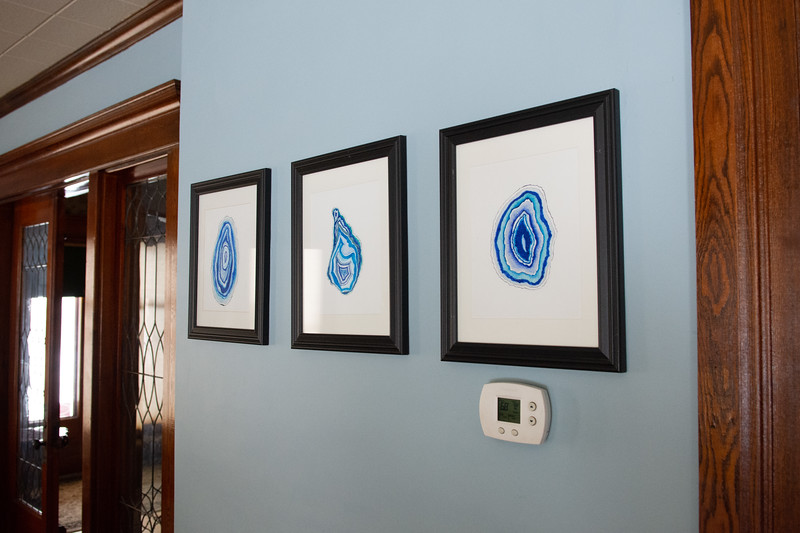
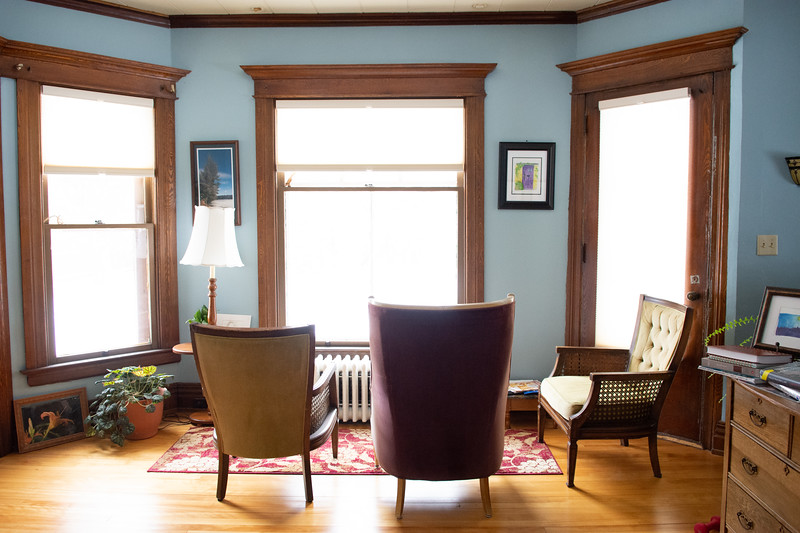

Connie begins her day with all the administrative chores of artistry. She manages her Facebook and Instagram pages. Connie also updates her website and mailing lists. She then tends to the B&B, which is yet another work of art. Connie keeps the house filled with guests during the summer months. In the off months, she still has plenty of room for guests and family. Each room is decorated with the art Connie has made herself or acquired from other artists. Even her family contributes. Their paintings adorn the walls. Their pottery decorates the shelves. Their musical instruments are placed on the floor in cases. Visible are a bluegrass banjo, a mandolin, and a guitar. Connie also mentions a newly acquired upright bass.
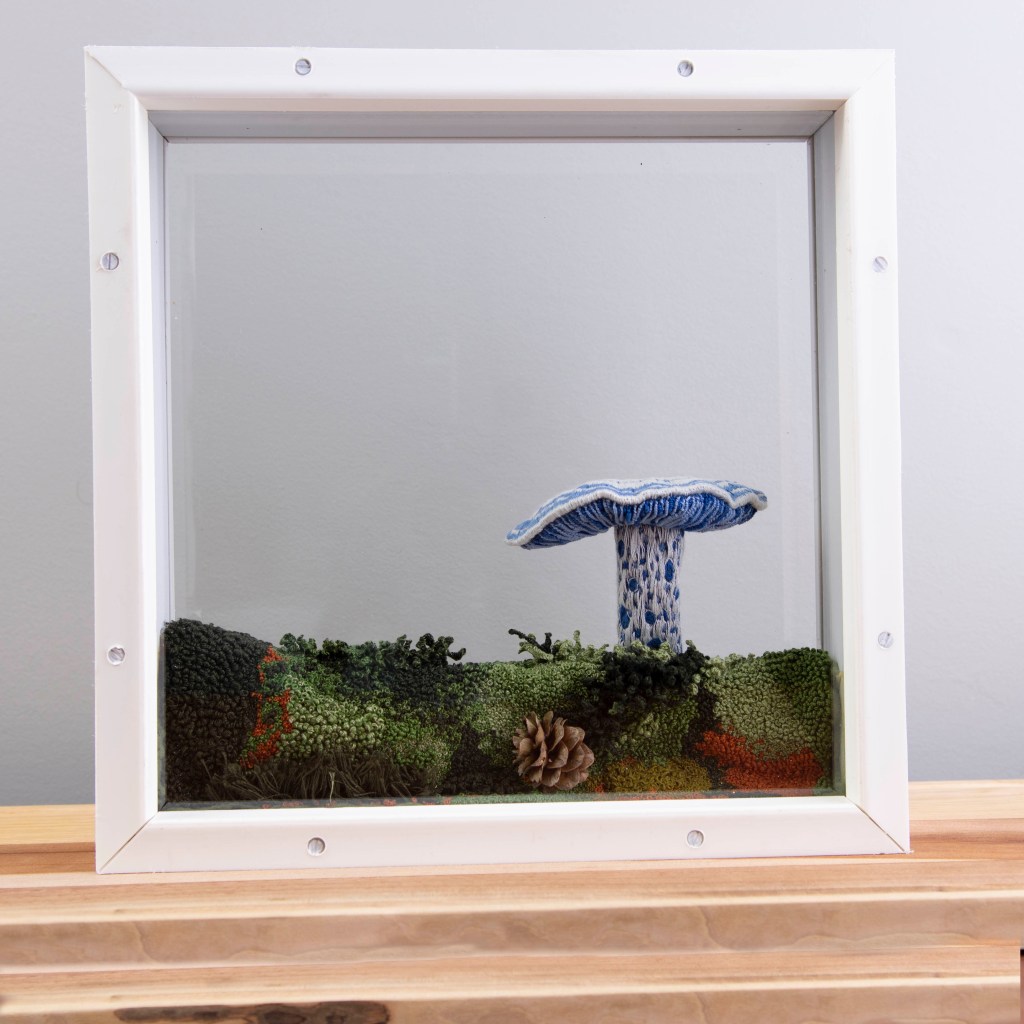
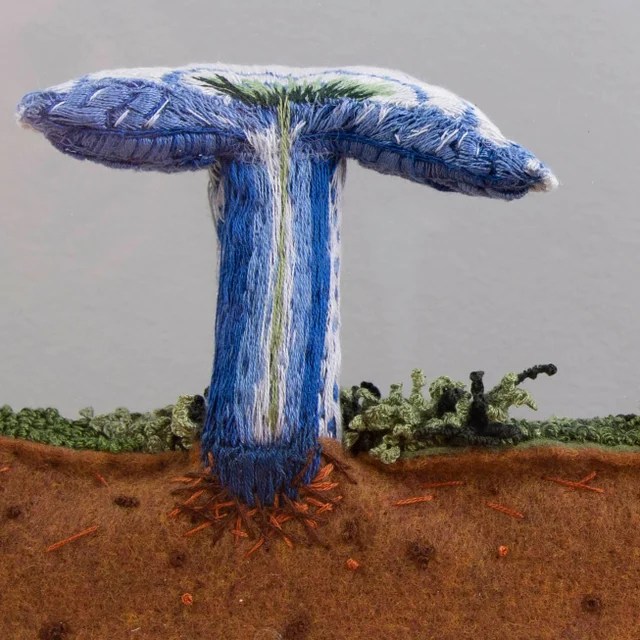
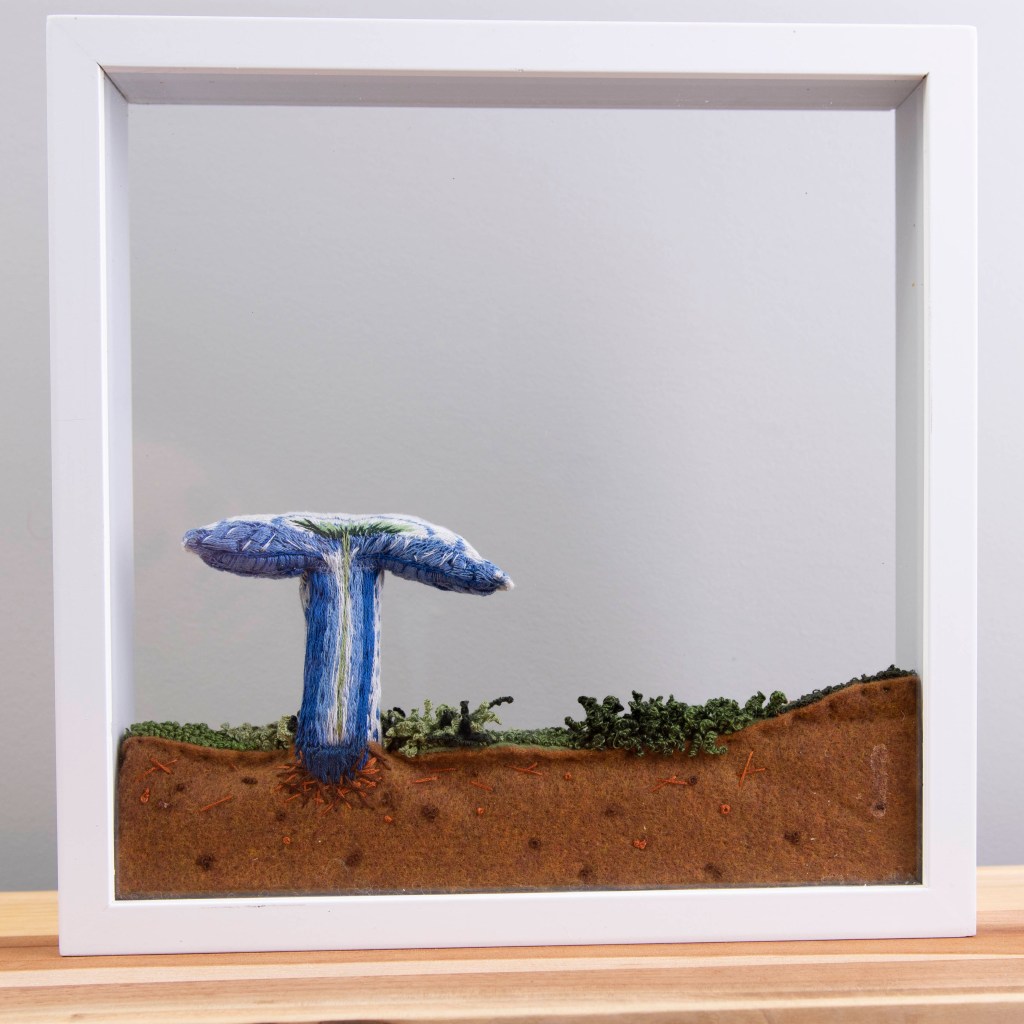
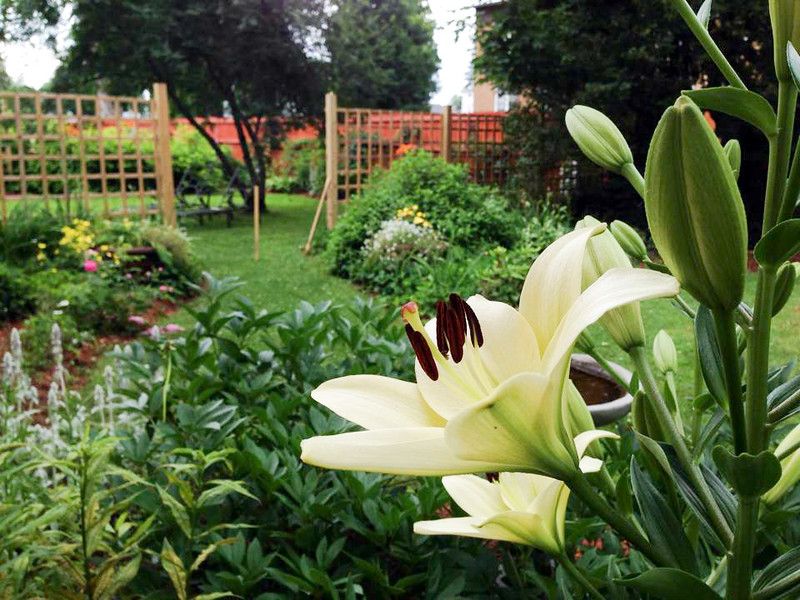
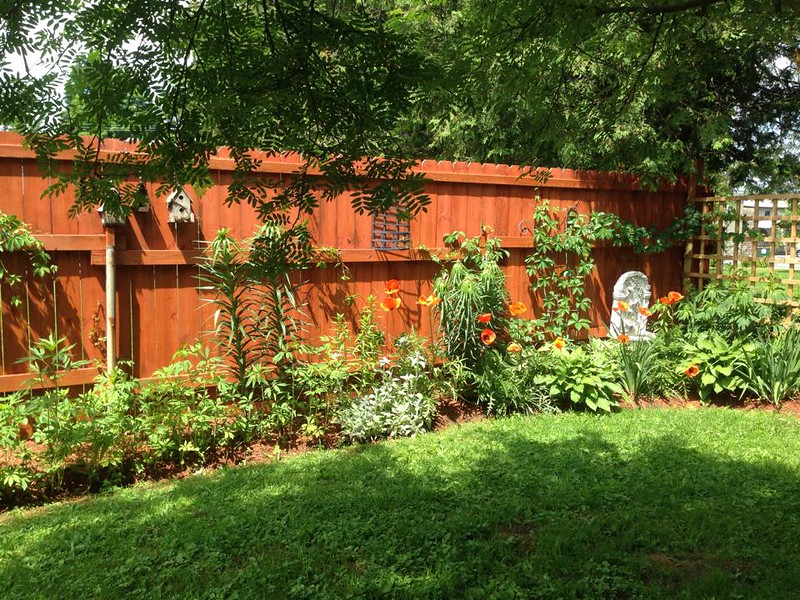
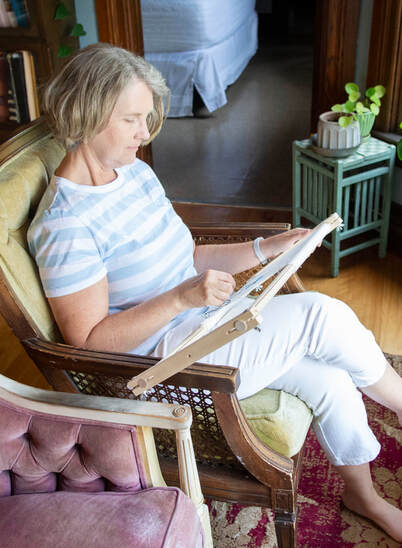
The artistry in every room is joined by plants. Some are draped over furniture, sitting in corners, or hung from the ceiling. One Burro’s tail is nearly nine feet long. Connie creates her patterns and chooses project colors during the day when the light is good. She can sit in one of her oversized chairs near several windows. Each window offers a stunning visual view of something she has painted or planted in the garden. There are also many fruit trees, berry bushes, and a variety of vegetables and flowers.
Connie listens to audiobooks as she works her needle, She says. “It takes many hours to create one mushroom or flower. Then it takes many more hours to stitch the supporting pieces. The backgrounds or bases are then made to compliment and show each piece in a unique, one-of-a-kind way.” And they are unique. She uses a dimensional embroidery technique called “stumpwork,” which originated in the 17th century. She uses a floor stand to hold her embroidery hoop or frame. This helps her create the tiny details that make it so realistic. This often involves using various stitches and materials to add depth and texture. Besides the 3D creations of moths, butterflies, and flowers, some of her 3D mushroom creations appear both forward and backward-facing. This orientation allows an internal view of the mushroom. They should line the walls of botanical classrooms.
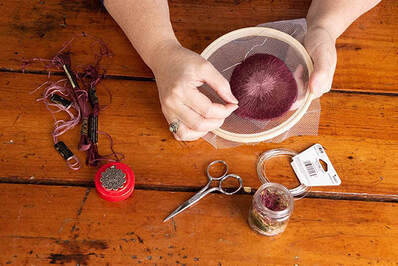
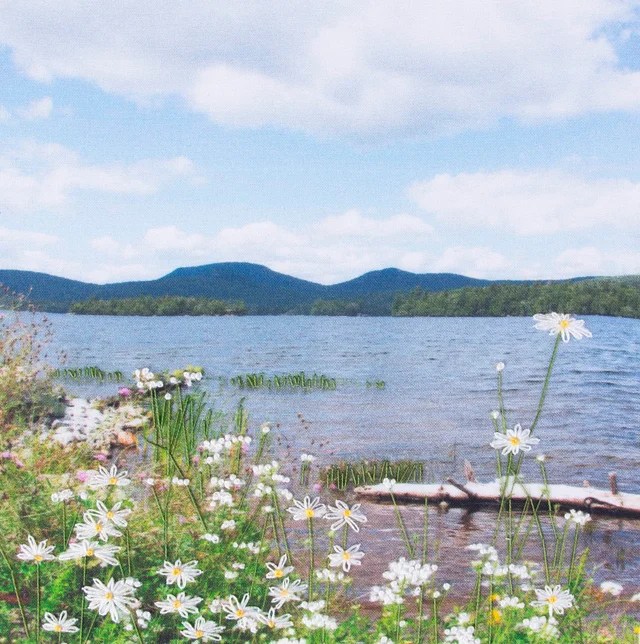
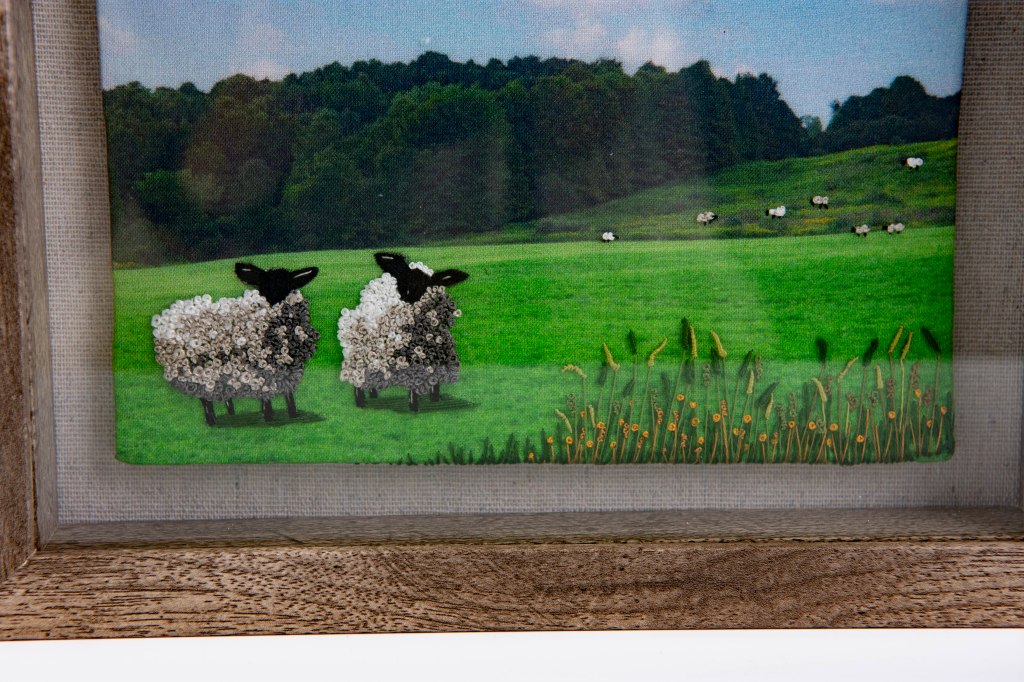
Connie uses her photographs as backgrounds for her needlework. She embellishes the photo with cotton, silk, or wool threads. She enhances the photo by layering, and strategically choosing points within her photographs that allow for dimension and depth. One that is loved by all is the 3D landscape “Daisies on Blue Mountain Lake.” (pic). The foreground daisies have a texture that draws the eye and are balanced against the mountains in the background. The boldness of the dark mountains plays off the lively daisies. She plays with color and depth in these textured landscapes. Her “Sheep Herd” piece is another example that plays with texture while being playful. It reveals two chubby and fluffy sheep. They stand in the foreground while several sheep are intimated as tufts of white in the background. Viewing these works of art in person is preferable, given the minute details.


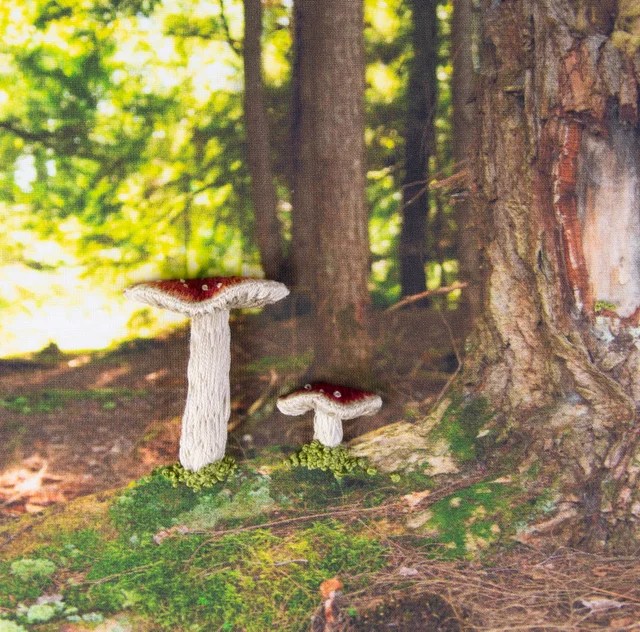
Most of her base layers consist of linen, wool, silk, cotton, and felt, upon which she builds her surface embroidery. Some of the designs look like aerial maps of Adirondack bodies of water. She works her stitches into water flowing or swirling, creating waves or rapids. Not only does she subtly blend the threads to suggest movement, but she also creates height and depth. Trees are tufts of greens, yellows, and browns. Some are captured in the fall and capture the vivid Adirondack oranges and reds. Some of her maps are so precise they look like a Google Earth satellite image!
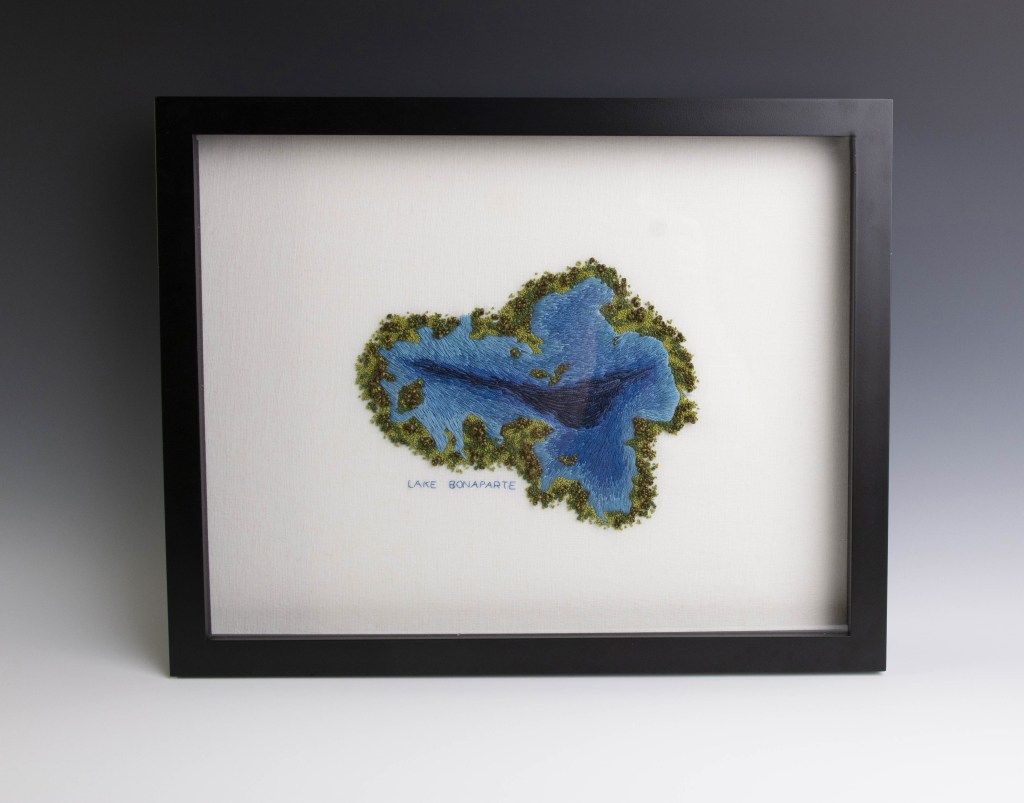
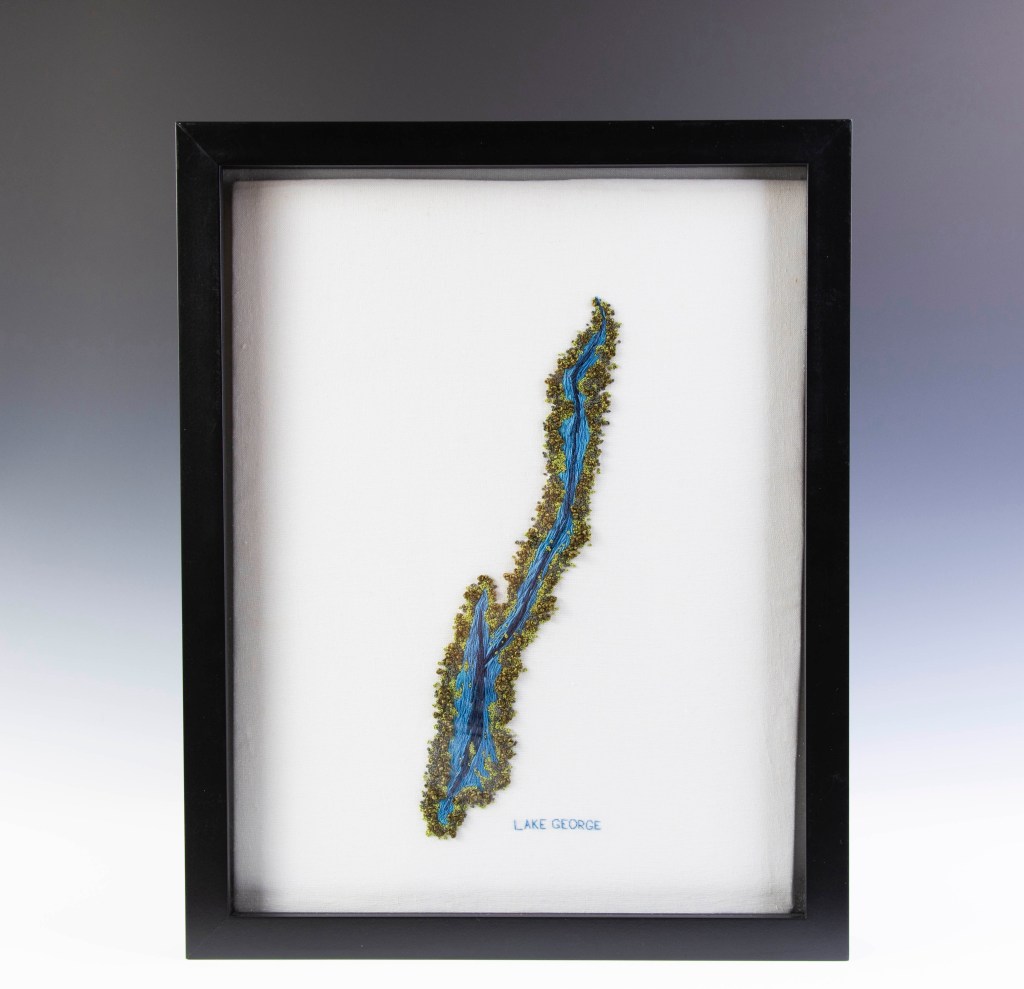
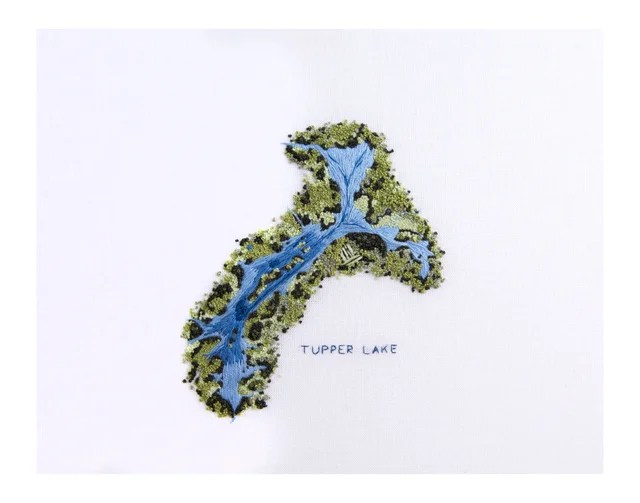
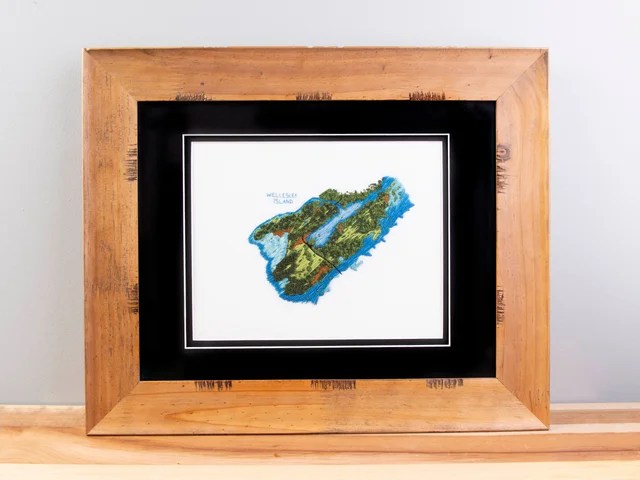
Connie has also been experimenting with abstract art and cell life. On a chosen background, often wool, she stitches shapes and patterns, using various techniques to create organic designs. They lend themselves well to being customized. Then there are sonograms done in embroidery. These are, of course, customized. They are the perfect gift for an expectant mother.
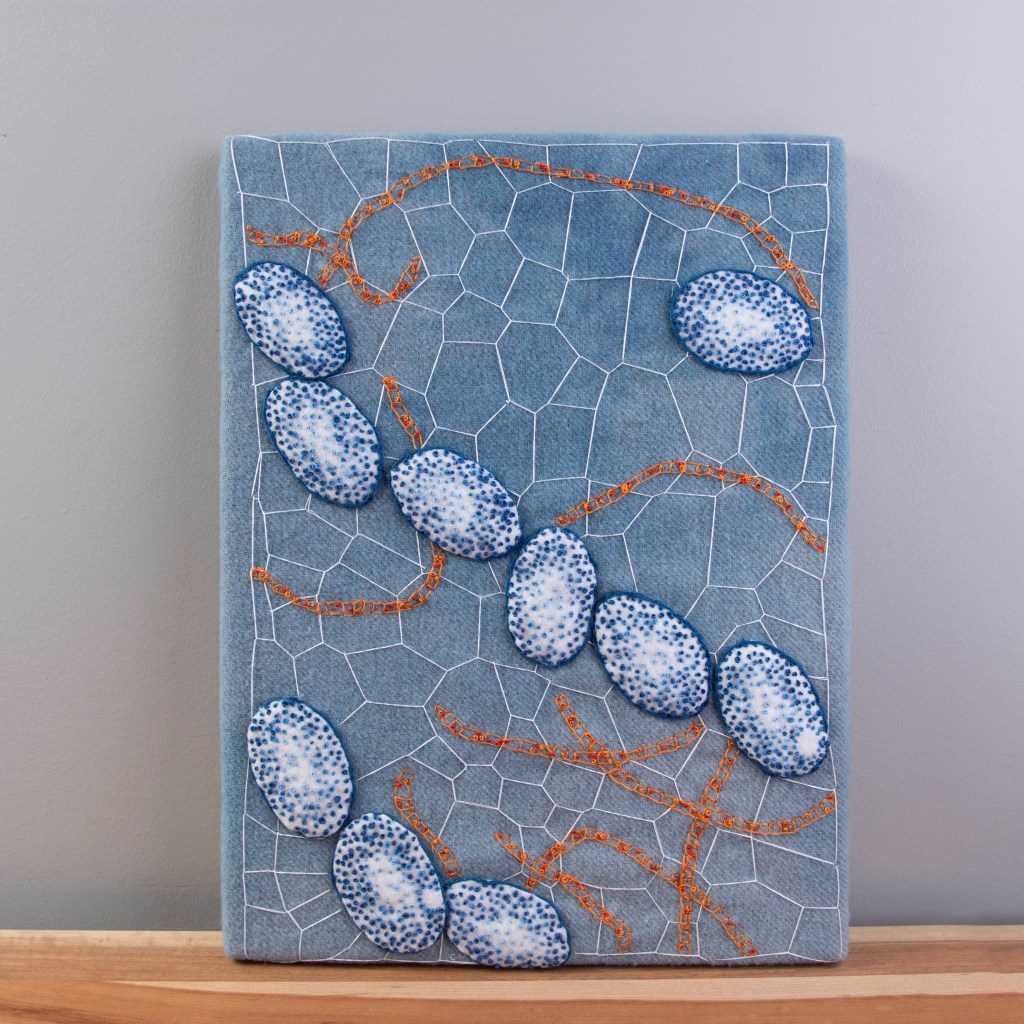
Connie spent the summer traveling all over New York State, attending fairs and festivals. Still, she is seeking the ideal venue for her signature art pieces. They are truly unique and can’t be found elsewhere. Her skills are truly distinctive. She creates items that do not exist on shelves in most places. Additionally, the possibility of customization lends itself to gifting for the holidays.
Connie participates in two Shop Hops. One is on Mother’s Day weekend. Another is in early December. During these events, you should visit her shop in Croghan. You can also meet other well-known and talented artists in Lewis County. In the meantime, her work appears at Tupper Lake Art Center. You can visit her shop by appointment. Just call ahead to arrange a time here. Her website is here.
See Connie’s Presentation here: Connie Noftsier Presents Stitching Science: The Anatomy of Leaves in Fiber Art
 Tug Hill Artist Network